
Co-founder
From Local Roots to the World: Production Heritage and Innovation
A perspective on production heritage in Türkiye and around the world through research, innovation and international experience.
Read articleKnow its origin. Value its story. Protect its heritage.
Find a product and explore its origin. Understand its characteristics and protection in one place.
A geographical indication protects a product name linked to its place of origin.
Search by product or place. Choose a country or discover origin areas near you.
Advanced database search, status filters and product comparison ↗
Distances use a reference point for the product’s associated area. Pins are not producer or shop addresses. Country pins filter records and are excluded from distance calculations.
Your location is used only in this tab; it is not stored or sent to GeOrigin’s server.
GeoNames · CC BY 4.0 · GeoNames · Natural EarthChoose a product to explore its origin, protection, production requirements and buying checks. Fields still awaiting review are clearly identified.
Official bulletins, research and global developments. Every story shows its original source and date.
Two perspectives on geographical indications from our founders.
Co-founder
A perspective on production heritage in Türkiye and around the world through research, innovation and international experience.
Read article
Co-founder
The role of geographical indications in social change, rural life and the need for reliable information.
Read articleWhy does a cheese, rice or craft carry a place name? Open a topic for clear explanations and real examples.
A product name can tell us what it is, where it comes from and why that place matters.
A geographical indication protects a product name linked to a place through its qualities, reputation or other characteristics. Türkiye registers these names under two categories: menşe adı and mahreç işareti.
Registration records the protected name in an official register. The product specification is its rulebook: it describes the production area, materials, methods, characteristics and controls.
A producer using the protected name must follow the product’s specification.
It does not automatically make the product organic, healthier or superior to every similar product.
The official recording of a protected name.
The rulebook setting the conditions for using the protected name.
The organisation identified in the application or registration.
The body that checks compliance with the production and name-use rules.
Protecting a name can help sustain the knowledge, livelihoods and cultural heritage behind it.
Protection helps prevent misleading use of a well-known name. Consumers can learn which requirements the name represents.
It supports the shared reputation and local knowledge of producers who follow the rules.
Materials, craft skills and the link to place are documented. Registration alone does not guarantee economic or environmental success.
For example, understanding Ezine Peyniri means learning about its milk blend, maturation and the community behind that knowledge.
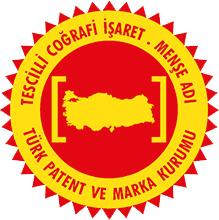
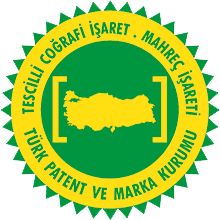
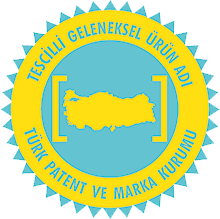
The colour helps you recognise the mark. Understanding what each scheme protects is the next step.
The product has a strong link to place: its essential qualities come from the area and all production stages take place there.
Milk origin, production area and method are considered together.
What does it not mean?The name cannot be used for any white cheese.
A quality or reputation links the product to a place. At least one stage has a regional connection; the product’s own specification determines the details.
Use of the name depends on the specified method and requirements. The Adana Kebabı specification also permits production elsewhere when its conditions are met.
What does it not mean?A name on a menu does not by itself prove that the business complies.
This is a separate category, rather than a type of GI. It concerns a traditional name, method or composition rather than a defined geographical origin.
In Türkiye, protection under this category depends on using the registered name with its official emblem.
What does it not mean?The word “traditional” alone does not establish registration.
An official emblem identifies the scheme. Compliance of a particular pack or business still depends on its product information, traceability and controls.
Source: TÜRKPATENT — protection categories
The specification describes preparation and service as well as the name. This sequence outlines the method; it is not a complete production instruction.
An important distinction: this specification permits production elsewhere under its conditions. A city name on a map is therefore not a complete explanation of the GI.
Adana location — OpenStreetMap. This view does not show a protected production boundary or approved businesses.
Start with the exact product name. Then check the emblem applicable to that product and jurisdiction, the producer information and the product-specific requirements.
3Producer name and contact details
4Maturation period: … months
5Batch and traceability information
Real labels may have a different layout. The product-specific logo has not been recreated in this diagram.
A general phrase such as “regional cheese” is not enough. Compare the name with the product profile.
This example uses Türkiye’s red menşe adı emblem. The product-specific Ezine Peyniri logo also needs checking.
Read the producer and production-location details. A seller’s address is not the same as the production area.
The Ezine specification sets a minimum eight-month maturation and requires the duration in months on the label. This is not a rule for every cheese.
If details are missing or inconsistent, ask the producer. Use the profile’s control-body and source information; appearance or price alone is not proof.
We can learn what the protected name represents and which details to check before buying.
Reading a label does not test the whole production process or every batch. This is why controls and traceability matter.
No. Schemes share broad aims, but their legal scope and marking requirements vary by jurisdiction and product category.
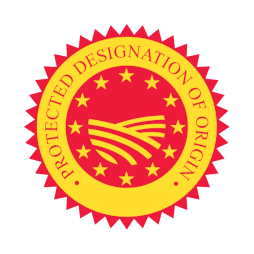
An EU scheme for a strong link between product and place. Parmigiano Reggiano is one example.
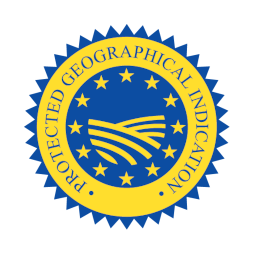
This EU scheme protects a link through quality or reputation. Do not assume every ingredient must be local: check the product specification.

A separate EU scheme focused on traditional methods or composition. It is not legally identical to Türkiye’s traditional product name system.
EU emblem rules differ across foods, wines and spirits. A labelling rule for food cannot simply be applied to every drink.
A name can be registered in Türkiye and protected separately in the EU or elsewhere. These are separate legal records for the same product, not necessarily different products.
Registration in one country does not automatically protect a name everywhere. Read origin country and protection jurisdiction as separate fields.
Explore Turkish applications, registrations, product specifications and emblem guidance.
Official source ↗Explore EU application, registration and amendment records for agricultural and food products, wines and spirits.
Official source ↗Search food and drink names protected in England, Scotland and Wales. EU schemes apply in Northern Ireland.
Official source ↗Explore registered products through Japan’s Ministry of Agriculture, Forestry and Fisheries. The National Tax Agency provides information on protected liquor names.
Official source ↗Explore applications, registered names and official documents through India’s Geographical Indications Registry.
Official source ↗Explore geographical indication announcements and official protection resources from China’s intellectual property authority, CNIPA.
Official source ↗In Switzerland, the responsible source depends on the product. Consult the Federal Office for Agriculture for agricultural products and the Swiss Federal Institute of Intellectual Property for non-agricultural products.
Official source ↗Explore geographical indication applications, registered names and protection categories through Brazil’s intellectual property authority, INPI.
Official source ↗EU applications for craft and industrial geographical indications opened on 1 December 2025. Explore how textiles, ceramics and natural stone can qualify and where to find application guidance.
Explore the official source ↗Research Malaysian geographical indications through MyIPO’s national search service and the ASEAN register it links to.
Explore the official source ↗Registration, controls, international protection, sustainability, quality and consumer understanding all matter. Open each topic for a short explanation and a product example.
Open a topic to read a plain-language explanation, an everyday example and the essential ideas.
Small questions can build better consumer awareness.
Understand the key distinctions through everyday buying situations.
Both distinguish products, but in different ways. A trade mark distinguishes the goods or services of a business. A GI protects a product name linked to a place. A producer’s own brand and the protected name can appear on the same package.
No. A GI concerns origin and product-specific requirements. Organic production is a separate certification system. A GI cheese is not automatically made with organically produced milk.
Registration defines particular characteristics and production rules. It does not rank the product above all alternatives. Nutrition, hygiene, health claims and individual suitability require separate consideration. A GI is not a health claim.
The applicant organisation is not automatically the only producer entitled to use the name. Eligible producers must meet the geographical and specification requirements and the applicable notification and control obligations. The rules must be checked for each product.
Yes. A product can have separate national, EU and other protection records. To understand where protection applies, look at the jurisdiction of each record as well as the origin country. National registration does not automatically create worldwide protection.
No. Buying a cheese in Ezine does not, by itself, prove compliance with the Ezine Peyniri specification. Check the exact name, producer, production area, applicable emblem and product-specific labelling requirements together.
The applicant or registrant is the organisation named in the registration. The control body checks compliance with the specification. They can have institutional links, but their roles differ. Profiles therefore present them separately.
The emblem is an important starting point, not complete evidence of the production process. Compare producer and label details with the product rules. Ask the producer, registrant or relevant control body about missing or questionable information.
We do not use an unrelated photo as if it showed the protected product. Images need a verified identity match and reuse rights. Production, control and label details are added as official documents are reviewed. Pending fields are labelled rather than filled with guesses.
Share a question, suggestion or correction. You can also submit editorial contributions and collaboration proposals here.
info@georiginsearch.comShare your questions about product information and sources.
GeOrigin explains product origins and geographical indication protection in clear language. Register information and editorial explanations are assessed separately. Unverified information is not presented as established fact; suggestions and corrections are reviewed before publication.
Product information is based on the relevant official records. Photographs and emblems remain subject to their respective rights.
Your name, email and message are stored on our server to review and respond to your inquiry. For personal data requests, contact info@georiginsearch.com.
Official certification emblems belong to their respective systems. Illustrations are clearly identified. Product photography must have documented reuse rights; images without clearance must not be published as licensed assets.
Because the story of an origin should never get lost between a label and a database.
A cheese holds generations of knowledge. A grain carries a landscape. A geographical indication connects the people who make a product, the place where it belongs, and the consumers who choose it.
Know the origin. Recognise the value. Preserve the heritage.We founded georigin as two food-science professionals who believe that protected names should be understood not only by specialists, but by everyone who encounters these products in daily life.
Our journey places Turkish cultural heritage at its heart. We aim to make Turkish geographical indications visible worldwide while recognising and respecting the distinctive cultural heritage of every other country.
By translating registration records, specifications and control arrangements into clear consumer guidance, our goal is to help people discover what makes a product distinctive—and understand what a protected mark does and does not guarantee.
Food science, research, innovation and an enduring commitment to cultural heritage.
Chemical engineering PhD and food-technology specialist working across R&D, clean-label ingredients, innovation, entrepreneurship and the commercialisation of scientific knowledge. She brings a consumer-centred perspective to geographical indications and cultural heritage.
A food-science academic with experience in research, food technologies and university–industry collaboration. He contributes his scientific perspective to understanding traditional production systems, product identity and the wider value of geographical indications.